


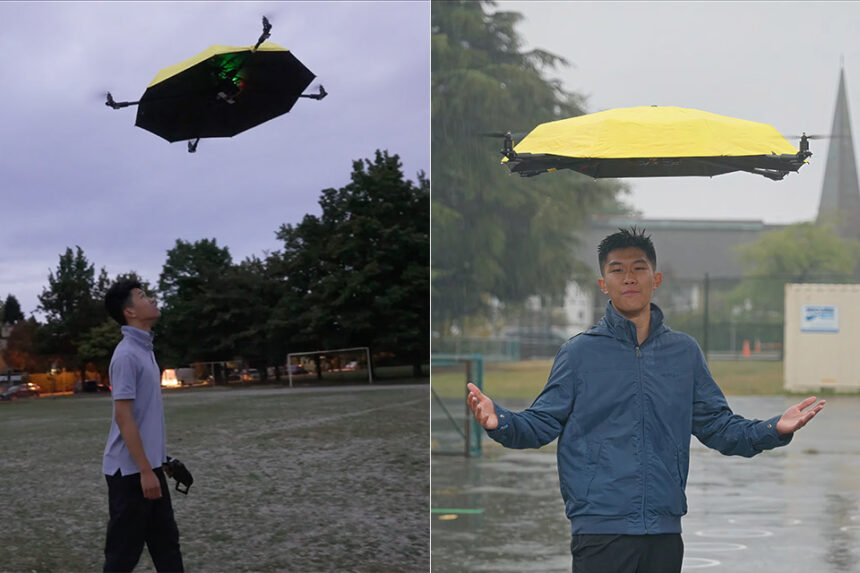
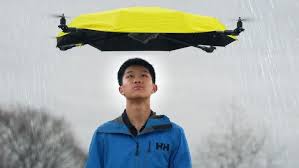
Innovation often begins with a simple question: What if everyday objects could think, move, and adapt on their own? For the creator behind the popular YouTube channel I Build Stuff, that question has led to one of the most fascinating personal tech inventions in recent times, Flying Umbrella 2.0, a fully autonomous, drone-powered umbrella designed to provide hands-free protection from rain. This latest version represents a major leap forward from the original prototype, pushing the boundaries of DIY engineering, robotics, and autonomous systems.
From Concept to Autonomy
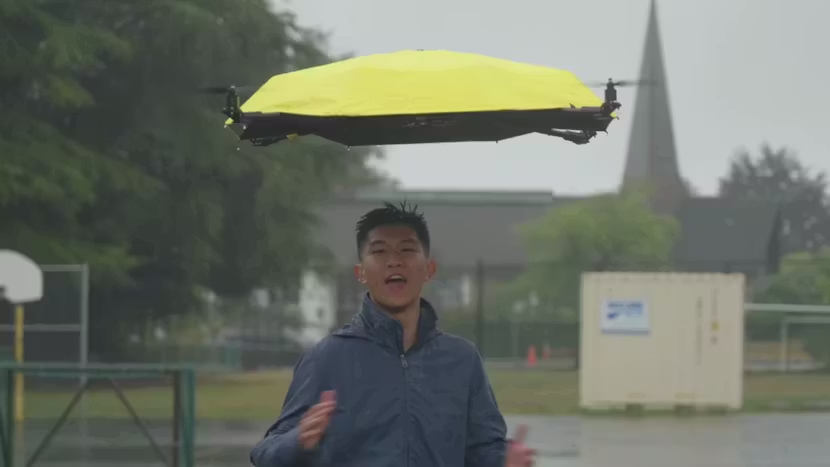
The first flying umbrella introduced by I Build Stuff was a remote-controlled experiment, impressive, but still reliant on manual input. Flying Umbrella 2.0 eliminates that limitation entirely. The device is now fully autonomous, capable of tracking a user and positioning itself precisely overhead without any remote control. This upgrade transforms the umbrella from a novelty into a serious demonstration of how autonomous technology can be applied to everyday problems.
How Flying Umbrella 2.0 Works
At the core of the system is a combination of advanced sensing, real-time computing, and drone flight control:
- Time-of-Flight (ToF) Camera: The umbrella uses a depth-sensing camera that measures distance by emitting infrared light and calculating how long it takes to bounce back. This allows the system to identify the user’s position accurately.
- Real-Time 3D Mapping: Using depth data, the system creates a live 3D map of its surroundings. This ensures the umbrella knows exactly where the user is at all times, even as they move.
- Raspberry Pi Processing: A Raspberry Pi serves as the brain of the device, processing sensor data and calculating precise adjustments needed to maintain position above the user’s head.
- Autonomous Flight Control: Drone motors and propellers automatically adjust thrust and direction, allowing the umbrella to hover, stabilize itself, and follow the user smoothly.
Engineering and Design
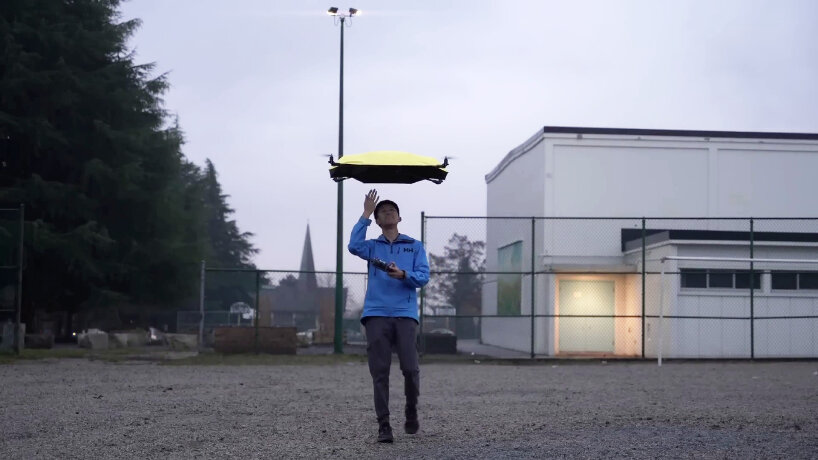
Flying Umbrella 2.0 is built using a mix of drone hardware and custom fabrication:
- High-performance drone motors
- 3D-printed components for custom structural parts
- Foldable carbon-fiber arms that give it a familiar umbrella form while remaining lightweight
- A compact design that balances lift, stability, and portability
Why This Innovation Matters
While Flying Umbrella 2.0 is not yet a consumer product, its significance goes far beyond rain protection. It highlights several important trends in modern technology:
- Everyday Autonomy: Autonomous systems are no longer limited to cars and drones — they are entering daily life in creative ways.
- Affordable Robotics: Using accessible components like Raspberry Pi and 3D printing shows how advanced robotics is becoming more democratized.
- Human-Centered Design: The umbrella demonstrates how technology can adapt to humans, rather than humans adapting to technology.
Challenges and Limitations
Despite its impressive capabilities, Flying Umbrella 2.0 still faces practical challenges:
- Battery life limits flight duration
- Safety concerns around spinning propellers near people
- Regulatory restrictions on flying devices in public spaces
- Performance in heavy rain or strong winds
These challenges highlight why such devices are still experimental but they also point to areas for future improvement.
A Glimpse Into the Future
Flying Umbrella 2.0 is a bold reminder that innovation doesn’t always come from large corporations. Sometimes, it comes from independent creators experimenting, iterating, and pushing ideas further than expected. As autonomous technology, lightweight materials, and AI continue to evolve, concepts like this may one day influence commercial products from personal weather gear to autonomous personal assistants. For now, Flying Umbrella 2.0 stands as an exciting symbol of what’s possible when creativity meets technology.
 /home/afripjzx/technewsglobal.net/wp-content/themes/foxiz/templates/popup.php on line 167